
Brief. Brutal. Effective.
Train like the legends. HIT is a High Intensity Training planner and logger — curated plans, exact loads to lift, and every set tracked.
- 2–3
- sessions per week
- 30–60
- minutes per session
- 1
- all-out set per exercise
One all-out set. Then go home.
High Intensity Training is strength training stripped to what actually drives growth: take a set to the point where another clean rep is impossible, then stop. That single honest effort is a stronger signal than hours of comfortable volume — and it leaves you fresh enough to recover and repeat.
Train to failure, not to a number
A set ends when the next rep is impossible with good form — not when you hit a rep target. That last honest rep is the one that asks the muscle to change.
Keep sessions short
Two or three sessions a week, 30 to 60 minutes each. If you can do a dozen sets for a muscle, none of them were hard enough.
Grow on the rest days
Training is the stimulus; muscle is built while you recover. Rest days are written into every plan on purpose — they are part of the program, not a break from it.
Let the logbook decide
Beat last session by a rep or a little more weight and the plan is working. Log every set and progression stops being a guess.
Everything the method needs, nothing it doesn't
Curated programs, the exact work for today, and a log built around the way HIT sets actually run.
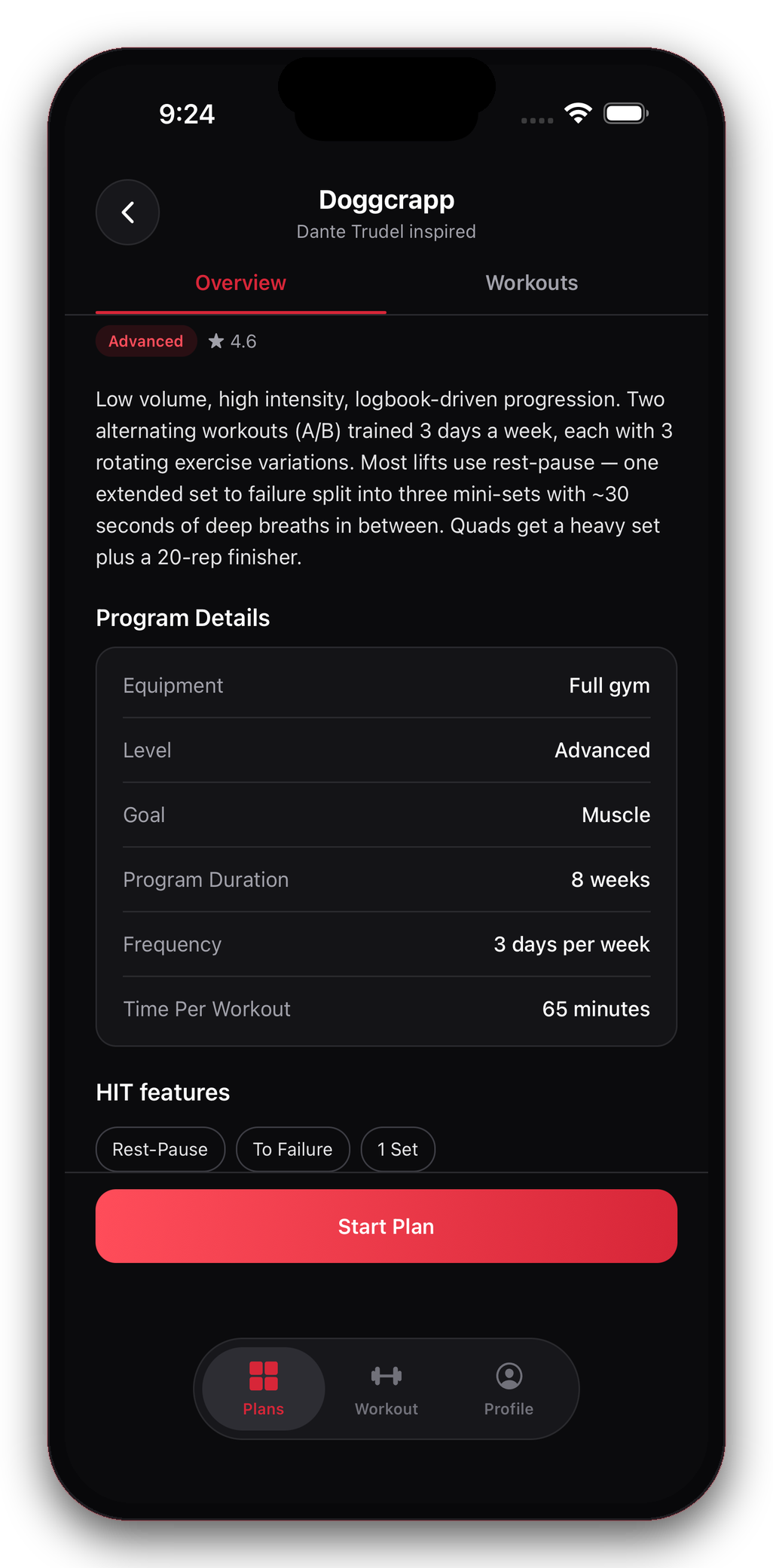
Programs with a track record
Browse a curated catalog of High Intensity Training programs — each one with its level, goal, duration, weekly frequency, and the HIT techniques it uses laid out before you start.
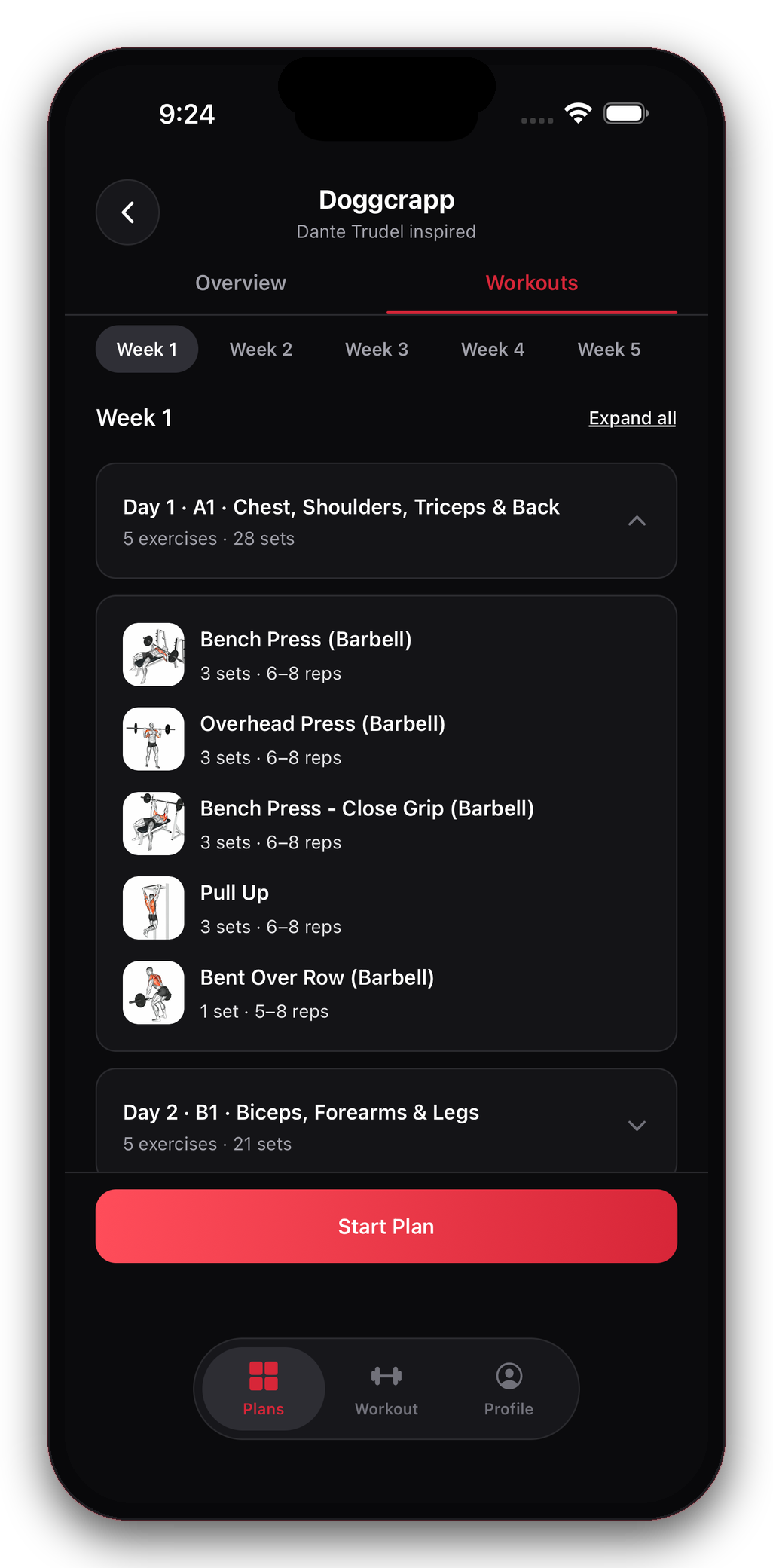
See the whole program up front
Every week and every training day is expanded before you commit. No drip-fed workouts, no black box — you know exactly what week five looks like on day one.
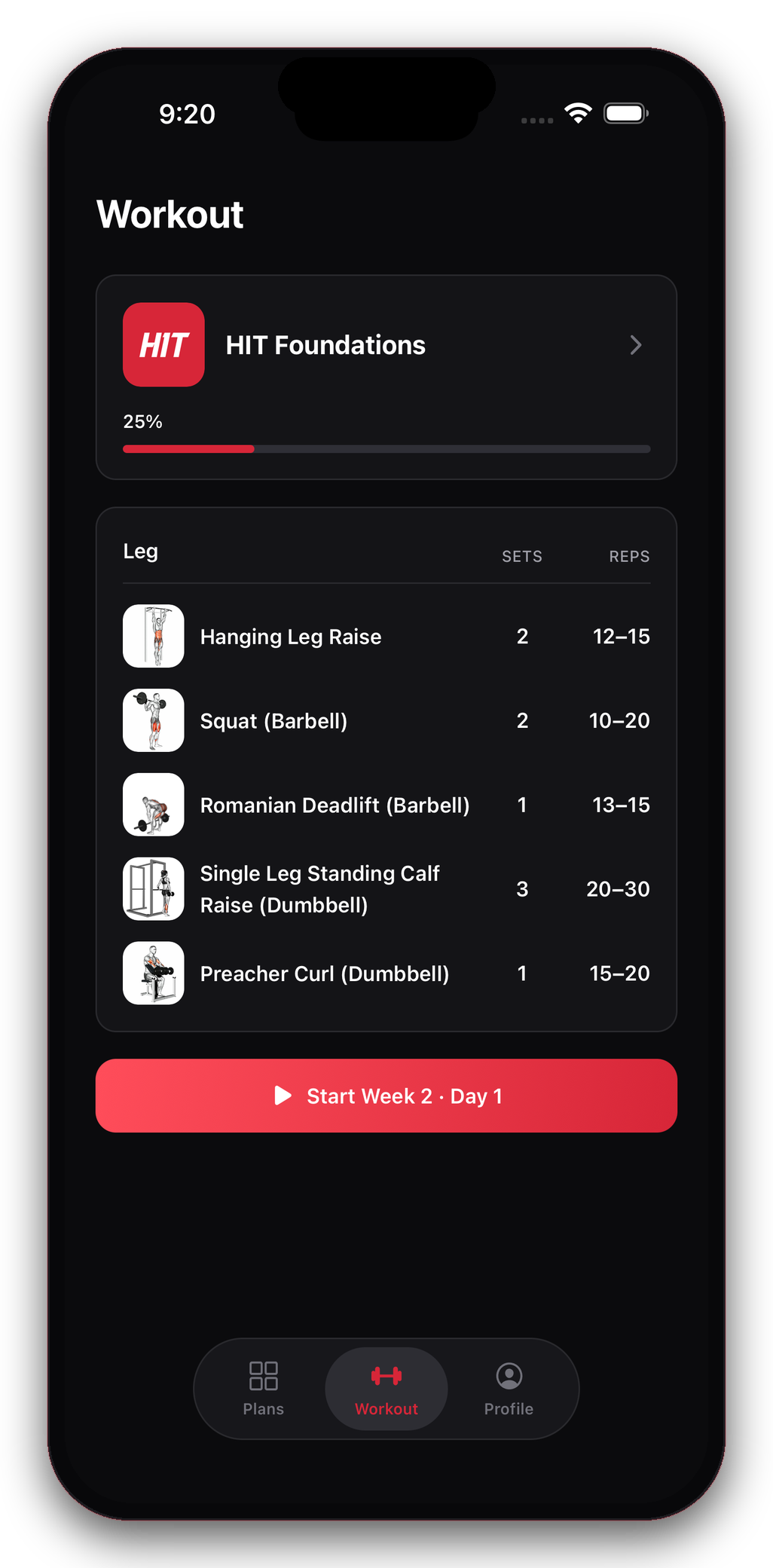
Open the app and start lifting
Your active plan tracks where you are and shows the next session with its exercises, sets, and rep targets. No planning, no decisions — just the work.
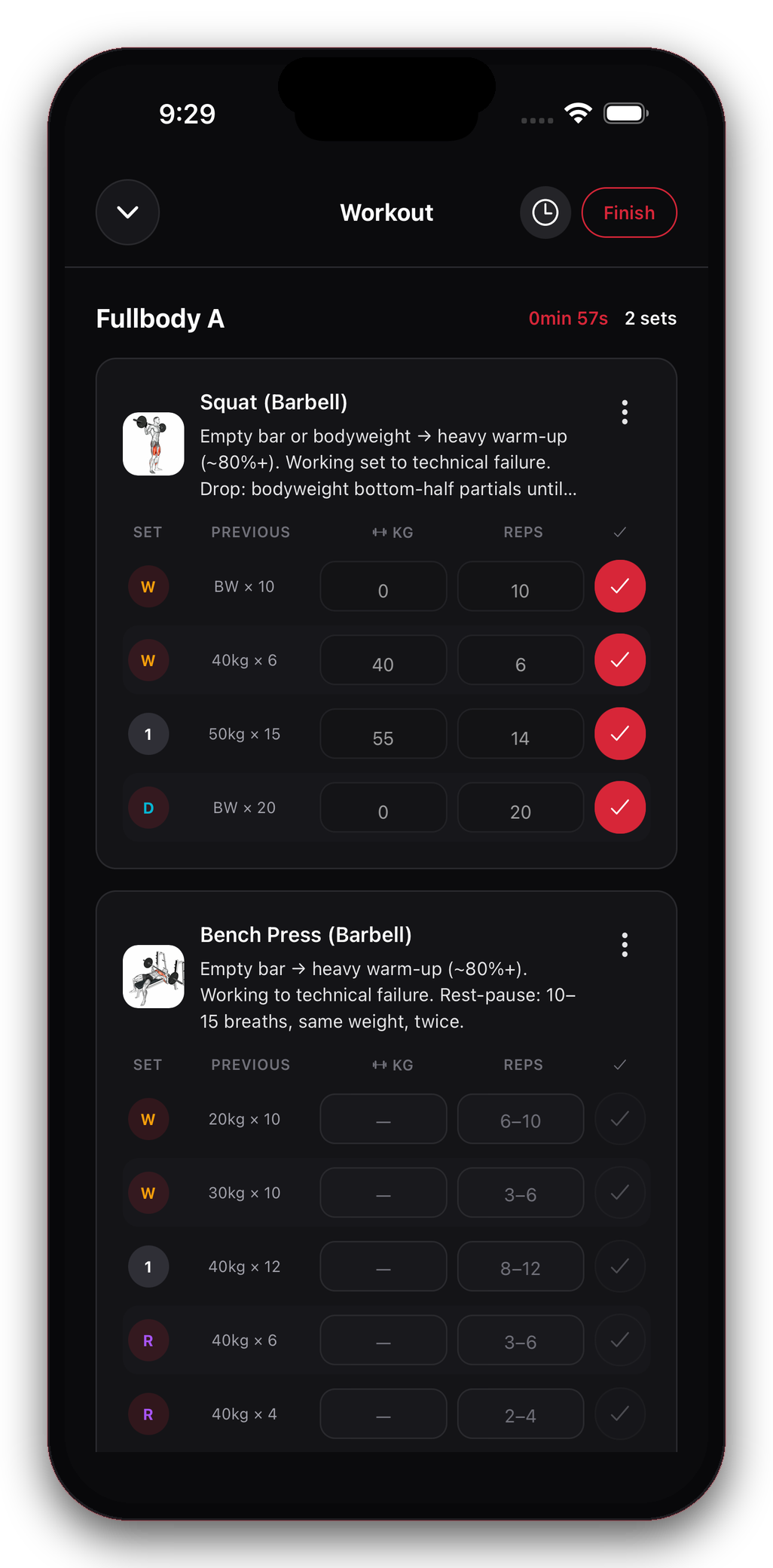
Log warm-ups, drops, and rest-pause
A logging screen built for HIT: every set is typed, last session sits next to the input, and a timer runs so rest-pause intervals stay honest.
Know how the lift should feel
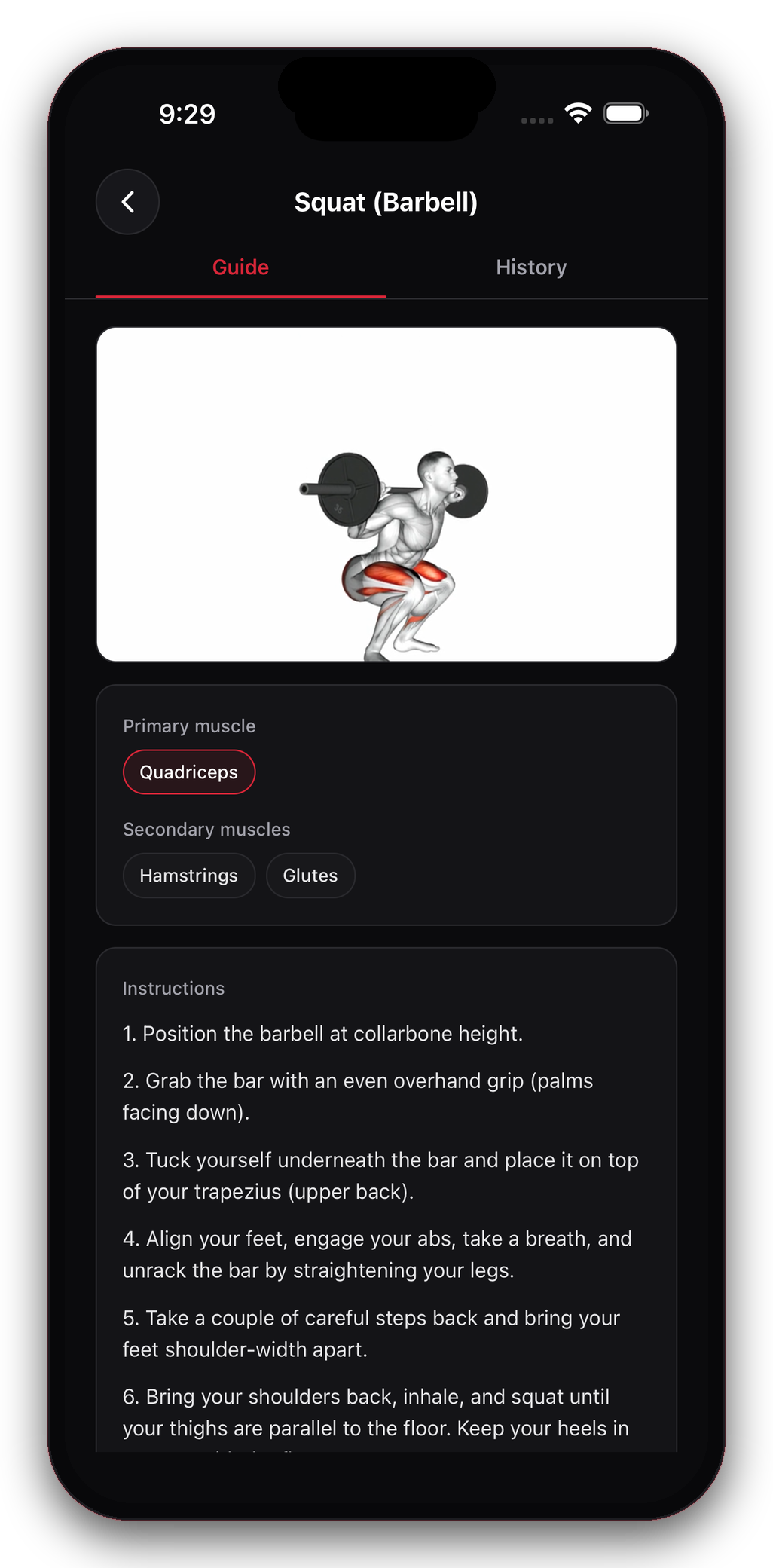
Animated demonstrations, primary and secondary muscles, and step-by-step instructions for every exercise — plus your own history on that movement.
Every set is tagged, so intensity is never a guess
Warm-up
Light ramp-up sets that prepare the joint and groove the movement. Never taken near failure.
Working
The set that counts. Taken to technical failure — the point where form would break down on the next rep.
Drop
Hit failure, strip the weight immediately, and keep going. Extends the set past the first wall.
Rest-pause
Hit failure, rest 10–15 deep breaths, then squeeze out more reps at the same weight. Repeat twice.
New to High Intensity Training?
What is High Intensity Training (HIT)?
HIT is a strength training method built on brief, infrequent, and very hard work. Instead of many moderate sets, you perform very few sets taken to muscular failure, then allow full recovery before training that muscle again. It was popularized by Arthur Jones and Mike Mentzer, and lives on in modern programs like Doggcrapp and Heavy Duty.
Is one set to failure really enough?
One set taken to genuine failure is a far stronger stimulus than several sets stopped short of it. The catch is the word genuine — most people stop two or three reps early. HIT works when the effort is real, which is exactly why the sessions can be so short.
Is HIT good for beginners?
Yes, as long as technique comes first. Beginners benefit from the simplicity: few exercises, clear targets, and no guessing about volume. Start with the HIT Foundations plan, learn each lift with the built-in exercise guides, and only push to failure once the movement feels controlled.
How often should I train?
Most HIT plans run two or three sessions a week, with at least one full rest day between them. Because each session is so demanding, training more often usually means training worse. The app schedules rest for you.
What plans are included?
A curated catalog of proven HIT programs — from HIT Foundations for your first months, to advanced logbook-driven programs like Doggcrapp. Each plan lists its equipment needs, level, goal, duration, and weekly frequency before you commit.
Do I need a full gym?
No. Every plan states the equipment it assumes, and plans range from full-gym programs to setups you can run with limited kit. Filter for what you have and pick from there.
Do I need an account?
Not to look around. You can browse the whole plan catalog and every exercise guide without signing up. An account is only needed when you want to activate a plan and save your training log.
Got a moment? That's all a session takes.
Browse every plan and exercise guide without an account. Sign in when you are ready to start training and keep your log.